
Filipino last names are much more than family identifiers—they carry stories of heritage, resilience, faith, culture, and generations of family history. Whether you’re researching your ancestry, choosing a character name, exploring Filipino culture, or simply curious about the origins of Filipino surnames, understanding Filipino last names offers a fascinating glimpse into the nation’s rich identity.Family names often connect us to our roots, remind us of our ancestors, and strengthen the bonds we share with loved ones. In many Filipino families, a surname symbolizes pride, unity, gratitude, and belonging. It represents traditions passed down through generations and serves as a lasting connection between the past, present, and future.
In this comprehensive guide, you’ll discover the history of Filipino last names, their meanings, common categories, popular surnames, unique family names, and answers to frequently asked questions.
What Are Filipino Last Names?
Filipino last names, also known as surnames or family names, are inherited names passed down through generations. They help identify family lineage and often reflect historical influences from Spanish, Chinese, Malay, Indigenous Filipino, and American cultures.
Today, Filipino surnames come from a wide variety of sources, including:
- Spanish family names
- Native Filipino words
- Chinese-Filipino heritage
- Occupations and professions
- Religious influences
- Geographic locations
- Personal characteristics
- Nature-inspired names
The History of Filipino Last Names
Before Spanish colonization, many Filipinos did not use hereditary surnames as they do today. People were often identified by:
- Personal names
- Tribal affiliations
- Parentage
- Occupations
- Physical traits
In 1849, Spanish Governor-General Narciso Clavería issued the Clavería Decree, which standardized surnames throughout the Philippines. Families selected surnames from a government-issued catalog known as the “Catálogo Alfabético de Apellidos.”
This initiative helped organize taxation, census records, and civil administration while creating the foundation of modern Filipino naming practices.
Why Filipino Last Names Matter Today
Filipino surnames remain important because they:
- Preserve family heritage
- Connect generations
- Reflect cultural identity
- Strengthen family pride
- Support genealogical research
- Honor ancestors
- Maintain historical continuity
For many families, a surname serves as a reminder that every person belongs to a larger story.
Most Common Filipino Last Names
These are among the most recognizable Filipino surnames:
- Cruz
- Reyes
- Santos
- Garcia
- Mendoza
- Bautista
- Ramos
- Flores
- Gonzales
- Aquino
- Castillo
- Torres
- Rivera
- Villanueva
- Fernandez
- Navarro
- Dela Cruz
- Mercado
- Perez
- Diaz
These names are found throughout the Philippines and among Filipino communities worldwide.
Popular Filipino Last Names and Their Meanings
Cruz
Meaning: Cross
A surname strongly associated with Christian faith and spirituality.
Reyes
Meaning: Kings
Derived from Spanish traditions and often associated with dignity and leadership.
Santos
Meaning: Saints
Reflects religious devotion and spiritual heritage.
Flores
Meaning: Flowers
Symbolizes beauty, growth, and renewal.
Ramos
Meaning: Branches
Often associated with peace and Palm Sunday traditions.
Castillo
Meaning: Castle
Represents protection, strength, and resilience.
Torres
Meaning: Towers
Symbolizes stability and perseverance.
Mendoza
Meaning: Cold Mountain
A historic Spanish surname carried by many Filipino families.
Bautista
Meaning: Baptist
Connected to Christian traditions and faith.
Villanueva
Meaning: New Town
Represents fresh beginnings and growth.
Traditional Filipino Last Names
Many Filipino surnames have been used for generations and continue to hold cultural significance.
Traditional Examples
- Abad
- Aguilar
- Alonzo
- Balagtas
- Bernal
- Caballero
- Castro
- Delgado
- Domingo
- Escobar
- Franco
- Herrera
- Luna
- Macaraeg
- Padilla
- Salazar
- Valencia
- Zamora
- Villamor
- Serrano
These names often reflect centuries of family history.
Indigenous Filipino Last Names
Not all Filipino surnames originated from Spain. Some have indigenous roots connected to local languages and traditions.
Examples include:
- Magbanua
- Dumlao
- Bagasao
- Mangubat
- Macapagal
- Pangilinan
- Gatmaitan
- Dayrit
- Almario
- Sumulong
These names preserve native Filipino heritage and linguistic traditions.
Filipino Last Names with Nature-Inspired Meanings
Nature has always played an important role in Filipino culture.
Beautiful Nature-Based Surnames
Last NameMeaningFloresFlowersRiveraRiverDel RosarioRosary Garden ConnectionMontesMountainsCampoFieldLunaMoonSolisSunMarquezSea-Related HeritageSierraMountain RangeArroyoStream
Nature-inspired surnames often symbolize growth, peace, and abundance.
Strong Filipino Last Names
Some surnames naturally convey strength and leadership.
Powerful Choices
- Castillo
- Torres
- Guerrero
- Navarro
- Salvador
- Bravo
- Leon
- Mercado
- Santiago
- Ventura
These names often evoke courage, resilience, and determination.
Elegant Filipino Last Names
If you’re looking for surnames with a sophisticated sound, consider:
- Valencia
- Montemayor
- Villanueva
- Alarcon
- Rosales
- Del Rosario
- Consunji
- Laurel
- Roces
- Zobel
These names are often admired for their elegance and historical significance.
Rare Filipino Last Names
Some Filipino surnames are less commonly encountered.
Unique Examples
- Aglibut
- Batac
- Dungca
- Mangaoang
- Tolentino
- Banal
- Lontok
- Tiongson
- Carandang
- Sarmiento
Rare surnames often make genealogical research especially interesting.
Filipino-Chinese Last Names
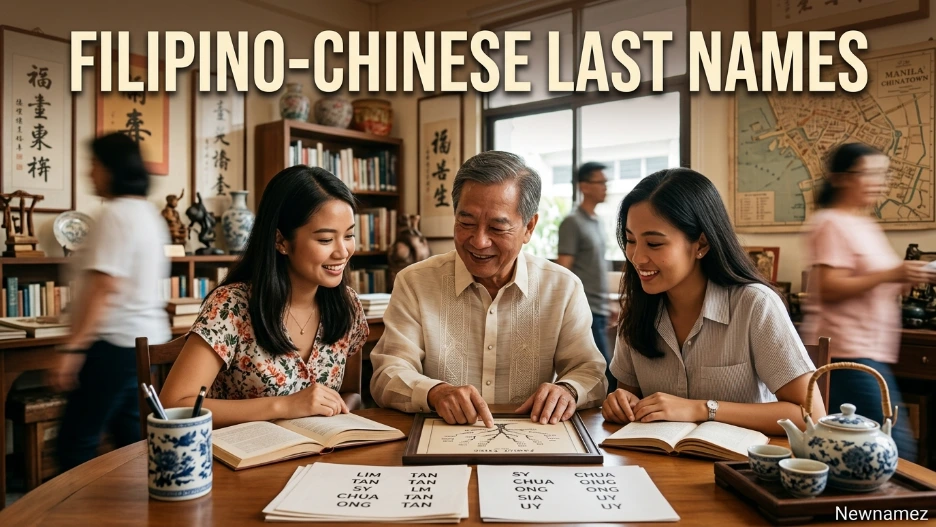
Chinese influence has shaped Filipino culture for centuries.
Popular Filipino-Chinese surnames include:
- Co
- Tan
- Ong
- Lim
- Sy
- Go
- Dy
- Chua
- Uy
- Tee
These surnames reflect the contributions of Chinese communities to Philippine society and commerce.
Filipino Last Names Associated with Leadership
Several surnames have become historically associated with leadership and public service.
Examples include:
- Aquino
- Roxas
- Quezon
- Osmeña
- Laurel
- Macapagal
- Magsaysay
- Marcos
- Binay
- Duterte
These names are prominent in Philippine history and politics.
Filipino Last Names for Character Creation
Writers and creators often choose Filipino surnames to add authenticity to characters.
Male Character Surname Ideas
- Mendoza
- Ramos
- Navarro
- Castillo
- Reyes
- Santiago
- Torres
- Ventura
- Luna
- Garcia
Female Character Surname Ideas
- Flores
- Valencia
- Rosales
- Dela Cruz
- Santos
- Rivera
- Bautista
- Villanueva
- Mercado
- Alonzo
Modern Character Surname Ideas
- Pangilinan
- Consunji
- Roces
- Tiongson
- Dayrit
- Sumulong
- Laurel
- Ong
- Lim
- Co
How to Research Your Filipino Family Name
If you’re exploring your ancestry, consider these steps:
1. Interview Relatives
Speak with parents, grandparents, aunts, and uncles.
2. Collect Family Documents
Review:
- Birth certificates
- Marriage records
- Baptismal records
- Immigration documents
3. Visit Local Archives
Historical records may provide valuable family information.
4. Build a Family Tree
Document generations and family connections.
5. Study Name Origins
Research the linguistic and historical background of your surname.
Interesting Facts About Filipino Last Names
- Many Filipino surnames originated from Spanish naming catalogs.
- Some families retained indigenous names despite colonial influence.
- Chinese surnames remain common throughout the Philippines.
- Religious themes appear frequently in Filipino surnames.
- Geographic features inspired many family names.
- Some surnames indicate occupations or social status.
- Filipino surnames often reveal multicultural ancestry.
How Filipino Last Names Reflect Cultural Identity
A Filipino surname can reveal layers of cultural history, including:
- Indigenous roots
- Spanish colonial influence
- Chinese heritage
- Religious traditions
- Family migration patterns
- Regional connections
These names serve as living records of the Philippines’ diverse and interconnected history.
Choosing a Filipino Last Name for Fiction or Creative Projects
When selecting a Filipino surname:
- Match the name to the character’s background.
- Consider regional origins.
- Research pronunciation.
- Respect cultural context.
- Avoid stereotypes.
- Understand the surname’s meaning.
Authenticity adds depth and credibility to storytelling.
FAQs
1. What is the most common Filipino last name?
Dela Cruz is widely considered one of the most common Filipino surnames, along with Reyes, Santos, Cruz, Garcia, and Mendoza.
2. Why do many Filipino last names sound Spanish?
Spanish colonial rule lasted more than 300 years, and the 1849 Clavería Decree standardized surnames using Spanish naming catalogs.
3. Are all Filipino last names Spanish?
No. Many Filipino surnames have indigenous, Chinese, Malay, and other cultural origins.
4. How can I find the meaning of my Filipino surname?
Research historical records, family documents, genealogy databases, and linguistic sources related to Filipino naming traditions.
5. What are some indigenous Filipino surnames?
Examples include Pangilinan, Macapagal, Magbanua, Sumulong, Gatmaitan, and Dayrit.
6. Do Filipino-Chinese families use Chinese surnames?
Yes. Common Filipino-Chinese surnames include Tan, Sy, Lim, Ong, Co, Chua, and Go.
7. Can Filipino last names reveal ancestry?
Often, yes. A surname may provide clues about geographic origins, ethnic heritage, migration history, religious background, and family lineage.
Conclusion
Filipino last names are powerful symbols of identity, family, and heritage. They connect individuals to generations of ancestors while preserving stories of culture, faith, resilience, and community. Whether your surname traces its roots to Spanish traditions, indigenous Filipino heritage, Chinese ancestry, or a blend of influences, it represents a unique chapter in the larger story of the Philippines.Exploring Filipino surnames is more than a search for meanings—it’s a journey into family history, cultural pride, and personal connection. Every surname carries a legacy, and every legacy deserves to be remembered, honored, and shared with future generations.
